How Teams Organise Farewells
Summary: How Workplace Farewells Usually Happen
Workplace farewells typically follow a predictable pattern:
- Someone remembers late — A team member realizes a colleague's last day is approaching
- Someone volunteers — A person steps up to organise the farewell card or celebration
- Messages get scattered — Contributions arrive via Google Docs, Slack DMs, emails, or physical cards
- Someone chases people — The organiser sends reminders to ensure everyone contributes
- It's rushed — Even with planning, the final hours are often a scramble
- It still matters — Despite the chaos, the gesture is meaningful and appreciated
This pattern is common across teams of all sizes, from startups to large enterprises, and is especially challenging in remote or hybrid work environments.
In most teams, farewells don't start with planning. They start with a Slack message.
Someone remembers late. Someone volunteers. Messages get scattered. Someone chases people. It's rushed. It still means something.
This is how it actually happens.
The Slack Message
It's usually Tuesday afternoon. Someone in the team channel types:
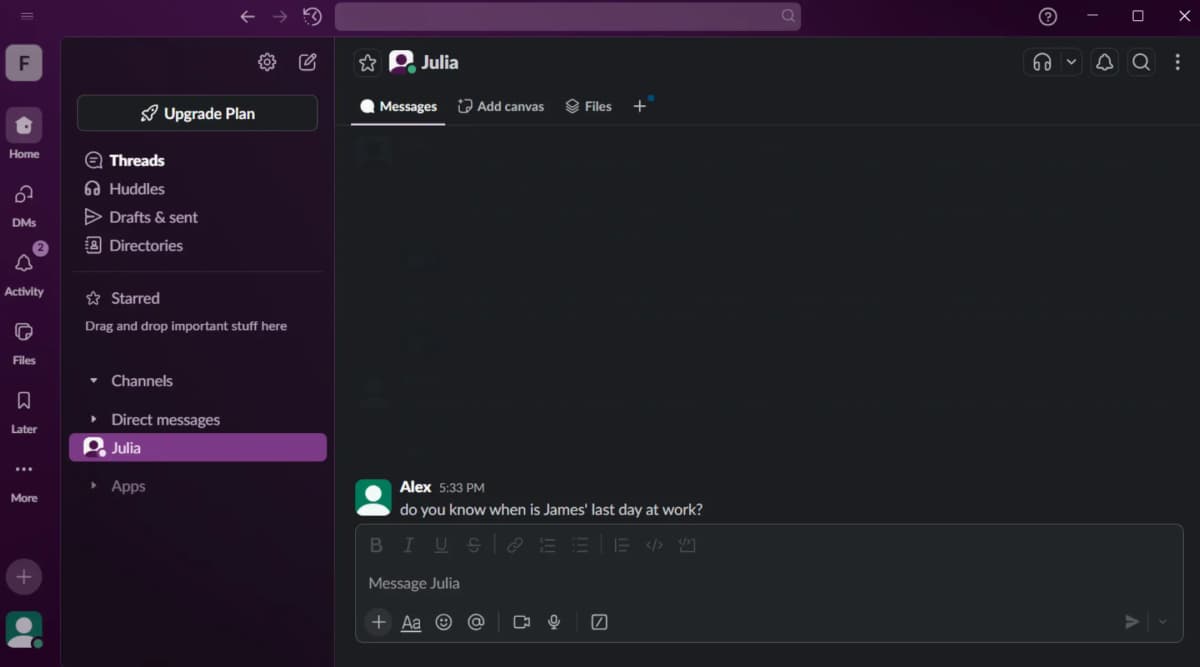
There's no planning document. No calendar reminder. Just a message that someone saw and thought to mention.
This is where it begins.
Someone Volunteers
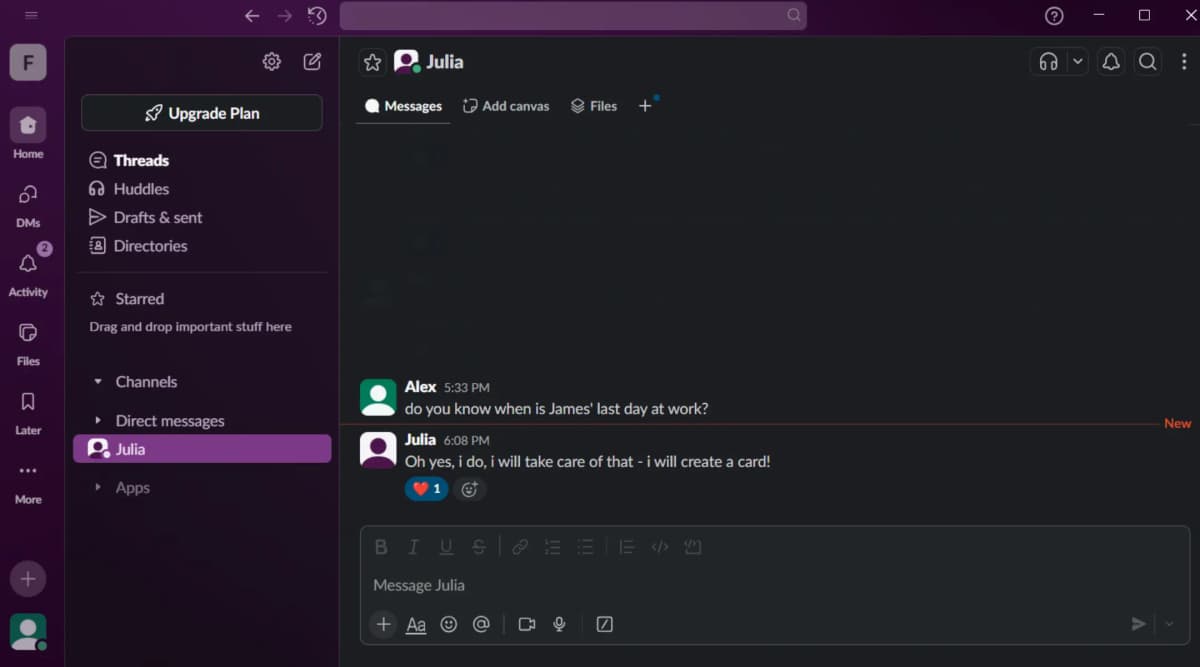
Within minutes, someone replies: "I can organise a card."
They don't know what that means yet. They just know it needs to happen. So they volunteer.
This person becomes the organiser. They didn't plan for this. They just stepped up.
Messages Get Scattered
The organiser starts collecting messages. They might use:
- A Google Doc that gets shared around
- Individual Slack DMs that pile up
- Email threads that branch into chaos
- A physical card that gets passed desk-to-desk
Messages arrive at different times. Some people write paragraphs. Others write one line. Some forget entirely until the last minute.
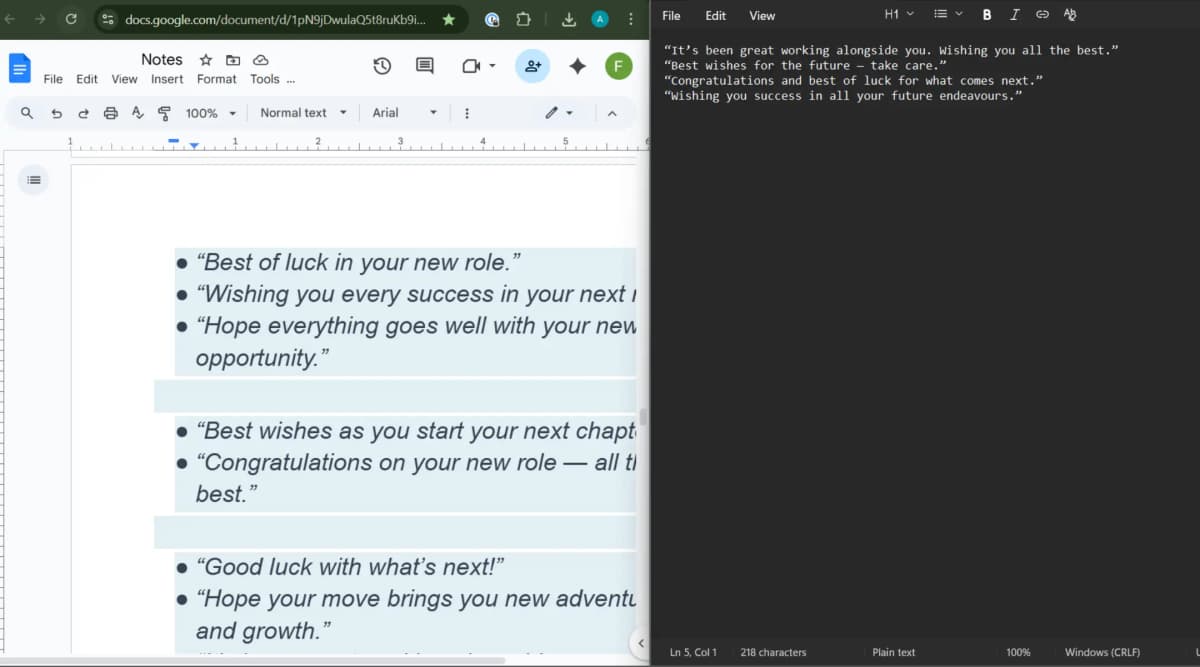
The organiser becomes a message collector. They copy, paste, format, and hope nothing gets lost.
Someone Chases People
Two days before the last day, the organiser realises half the team hasn't responded.
So they send reminders. They tag people in Slack. They send follow-up emails. They walk to desks.
Some people respond immediately. Others need another reminder. A few never respond at all.

This is the stressful part. The organiser becomes a project manager for something that should be simple.
It's Rushed
The last day arrives. The organiser is still collecting messages. They're formatting the card. They're trying to print it or email it.
Someone messages: "Can I still add something?" It's 4pm. The farewell is at 5pm.
The organiser says yes. They add it. They rush to finish. They hope it's good enough.

It always feels rushed. Even when it's planned weeks ahead, the final hours are always a scramble.
It Still Means Something
Despite the chaos, the card gets delivered. The person leaving reads it. They smile. They're touched.
The messages matter. The effort matters. The fact that people took time to write something matters.
The organiser feels relieved. It worked. It was stressful, but it worked.
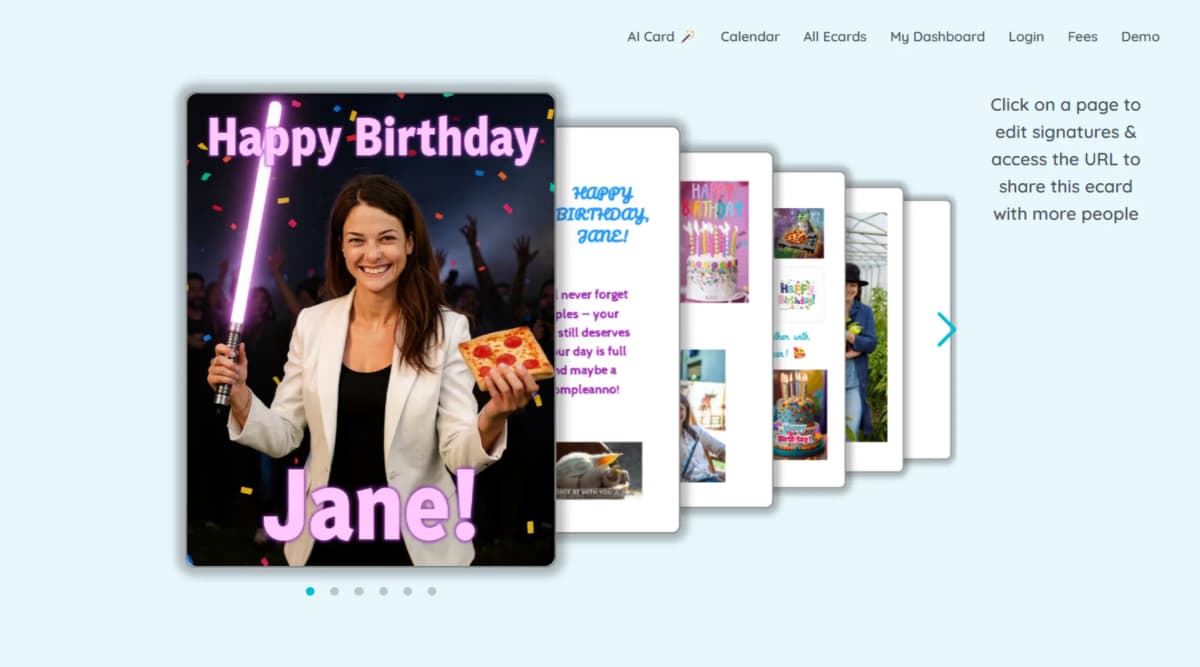
This is where most teams now use a shared card. One link. Everyone adds their message. No copying, no pasting, no chasing.
Where Digital Cards Fit
The organiser creates the card. They add their message. They share the link. That's it.
People sign when they have a moment. Messages arrive asynchronously. The card grows. No one needs to chase anyone.
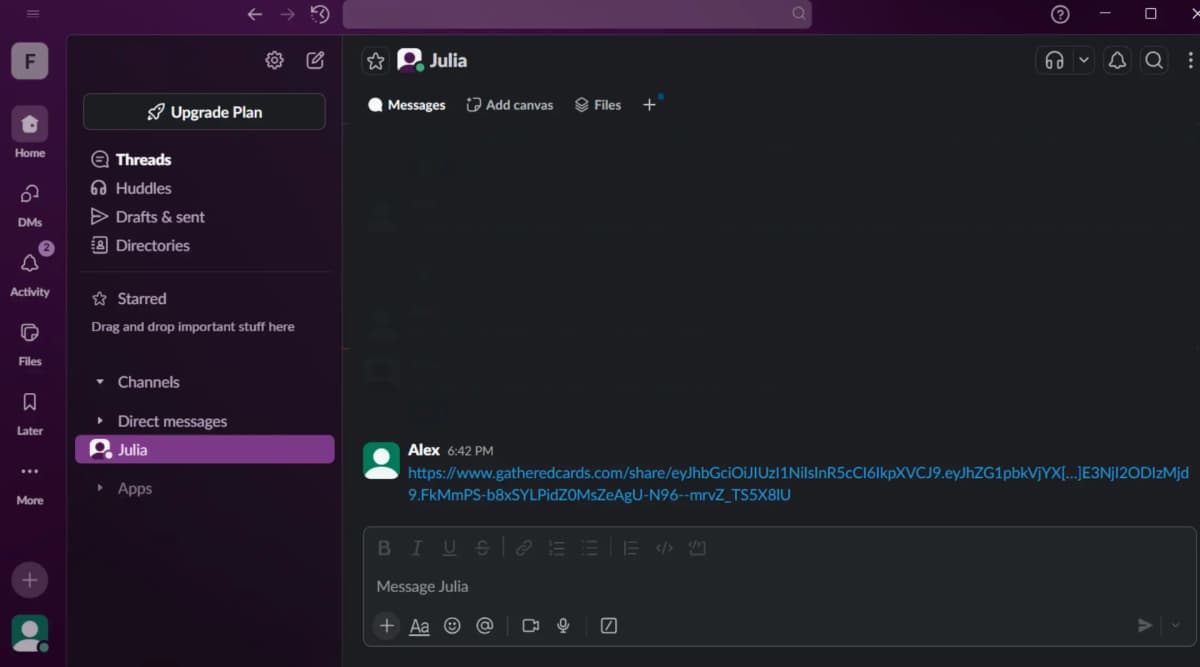
The organiser still coordinates. But they're not collecting messages anymore. They're just sharing a link.
After Doing This Once
After doing this once, teams usually say the same things:
- "We should have started earlier"
- "I forgot about James' birthday last month"
- "We almost missed John's work anniversary"
- "There has to be a better way to remember these"
The stress isn't just about the card. It's about remembering. It's about not missing things.
So next time, it's already there. A calendar that tracks birthdays, farewells, work anniversaries. Reminders that arrive 30 days before. No one forgets. No one scrambles.
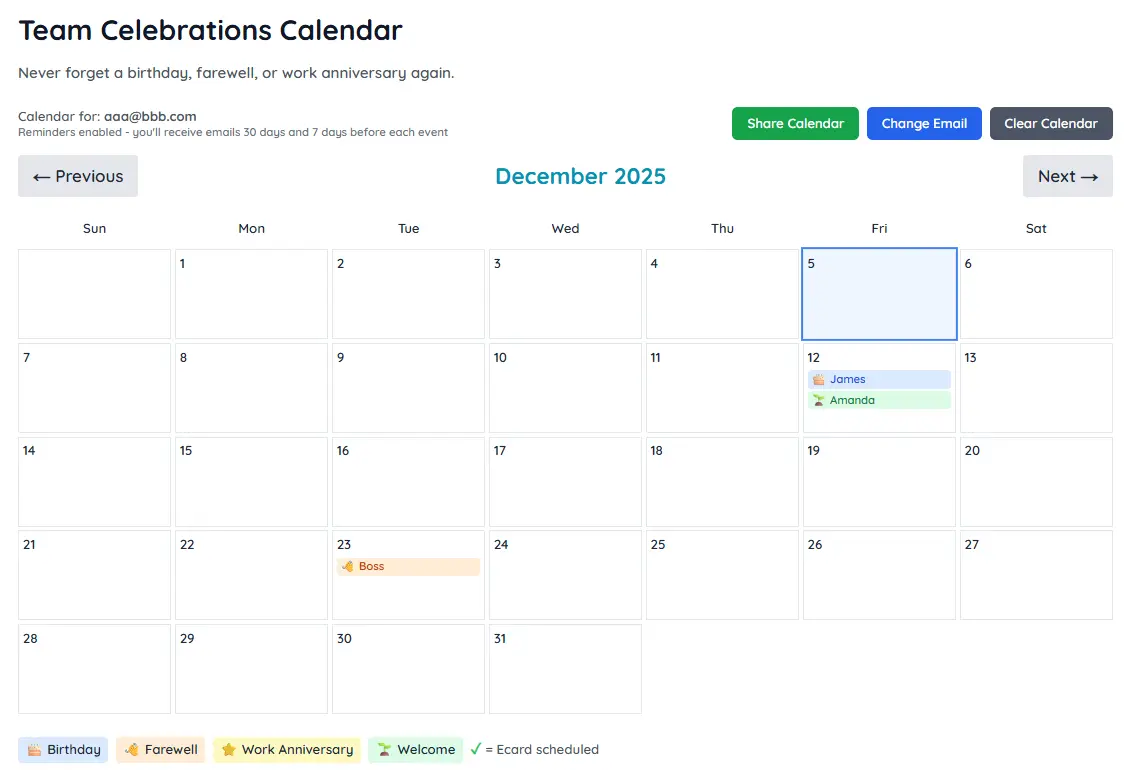
The calendar isn't a product. It's a memory aid. It's what teams use after they've done this once and realised they need to remember better.
Next Steps
If this sounds familiar, here are some options:
One link. Everyone signs. No chasing.
Get inspiration for what to write.
Track birthdays, farewells, and work anniversaries.